The End of Campaign Thinking: Why Brands Need Always-On Marketing Systems
The End of Campaign Thinking: Why Brands Need Always-On Marketing Systems
by
9 min read
13 min read
9 min read

For years, marketing has been built around campaigns.
Plan, launch, run, measure, then repeat.
It’s a cycle most brands are familiar with. And for a long time, it worked.
But today, that model is starting to show its limitations.
Markets move faster. Consumer behavior shifts daily. Attention is fragmented across platforms, devices, and environments. By the time a campaign is fully executed, the moment it was designed for may have already passed.
The problem isn’t execution.
The problem is the model itself.
Campaign thinking is no longer enough.
Campaigns are, by nature, temporary.
They are designed with a clear start and end, tied to a promotion, a product launch, or a specific objective.
But growth doesn’t happen in isolated moments.
It happens continuously.
When marketing is built only around campaigns, brands often face:
Gaps between activities, where visibility drops
Delayed insights that arrive after decisions have already been made
Disconnected efforts across media, content, and data
Limited ability to adapt in real time
Even when campaigns perform well, they don’t always create sustained impact.
They generate spikes, not systems.
The shift happening today is simple, but powerful:
From launching campaigns
To building always-on marketing systems
An always-on system doesn’t start and stop.
It runs continuously, learning, optimizing, and evolving in real time.
Instead of asking, “How did this campaign perform?”
The question becomes:
“How is our marketing system performing right now?”
This shift changes everything.
An always-on marketing system is a connected framework where:
Media runs continuously, not in isolated bursts
Content adapts in real time based on context and performance
Data flows instantly, informing decisions as they happen
Automation reduces delays, enabling faster execution
Channels work together, not independently
It’s not one tool or one campaign.
It’s a living system that operates 24/7.
Digital Out-of-Home (DOOH) plays a key role in this shift.
Traditionally, outdoor advertising has been fixed, tied to locations and timeframes. But modern DOOH, especially mobile solutions like dKilo, changes that dynamic completely.
DOOH becomes part of the system when:
Ads move through high-impact locations in real time
Content adjusts based on time of day, location, or audience context
Campaigns connect directly to mobile experiences through QR codes
Performance is tracked and optimized continuously
This transforms DOOH from a visibility channel into a real-time engagement layer within the broader system.
The real power of always-on marketing doesn’t come from individual channels.
It comes from how they work together.
When DOOH connects with:
Digital campaigns
Social media content
Landing pages and conversion funnels
Data dashboards and analytics
You move from isolated execution to integrated performance.
Each interaction feeds into the next.
Each insight improves the system.
This is where growth becomes scalable.
In an always-on system, speed matters.
Brands no longer wait for campaign reports.
They operate on live data.
If a location performs better, budgets shift instantly
If a message resonates, it’s amplified
If performance drops, adjustments happen immediately
This level of responsiveness is impossible in a traditional campaign model.
It requires a system designed for continuous optimization.
The brands that are growing fastest today aren’t necessarily the ones spending more.
They’re the ones operating smarter.
They don’t treat marketing as a series of activities.
They treat it as an engine.
An engine that:
Runs continuously
Learns constantly
Scales efficiently
And most importantly, delivers consistent, measurable results.
At its core, this shift is about redefining what marketing actually is.
It’s no longer just about creativity or media buying.
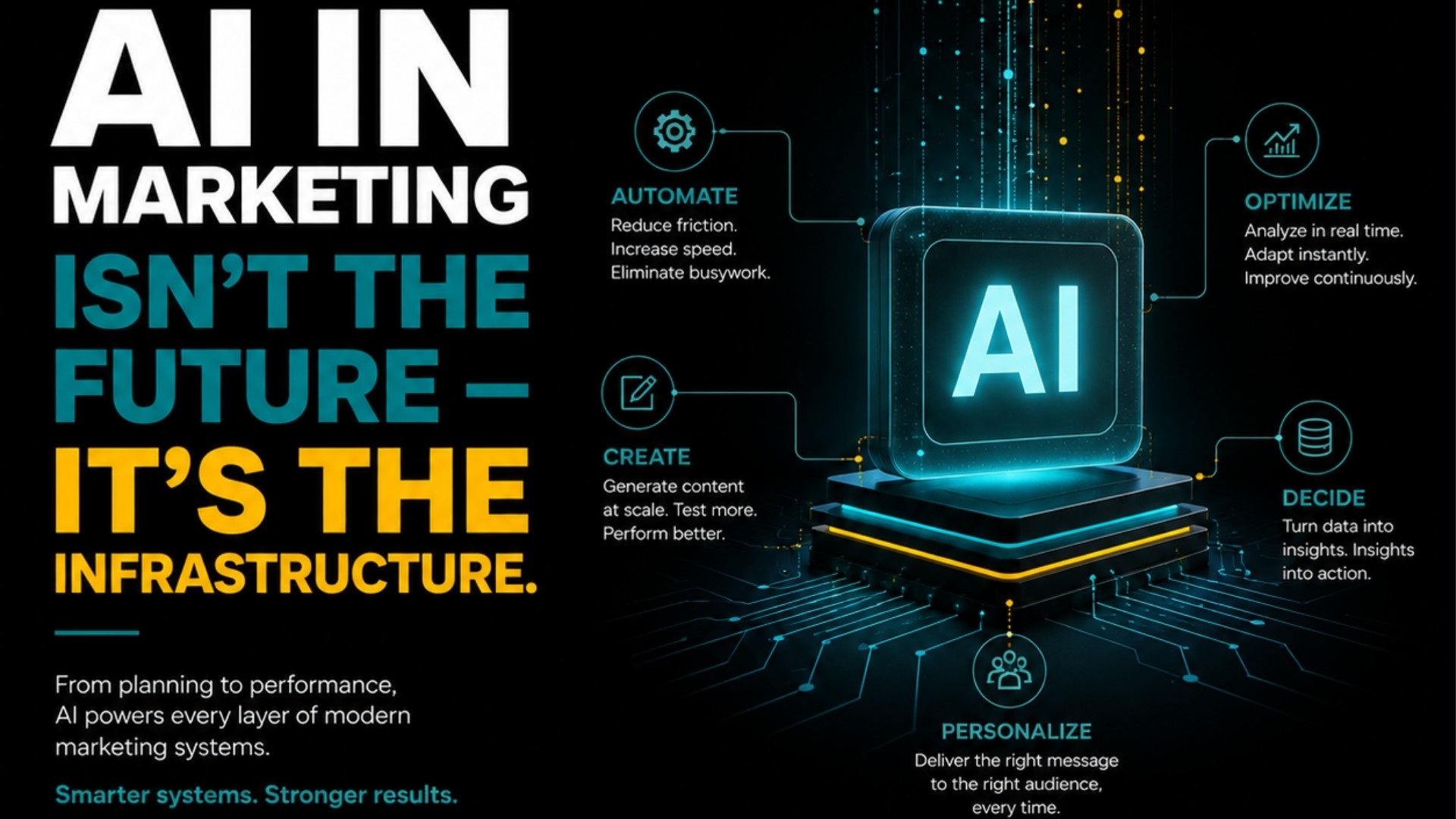
It’s about infrastructure.
Building systems that:
Connect channels
Align strategy and execution
Turn data into action
Support long-term growth
This is the difference between marketing that performs occasionally and marketing that performs continuously.
Moving to an always-on system doesn’t mean abandoning campaigns entirely.
It means placing them within a larger, more powerful framework.
Campaigns become part of the system, not the system itself.
For brands, this means:
More consistent visibility
Better use of data
Faster decision-making
Stronger return on investment
And ultimately, more sustainable growth.
The future of marketing isn’t built on isolated efforts.
It’s built on connected systems that operate in real time.
That’s the shift happening today.
And it’s the foundation of what we’re building at dKilo.
Not just campaigns.
Not just channels.
But always-on systems designed for growth.
dKilo — Defining Different.